

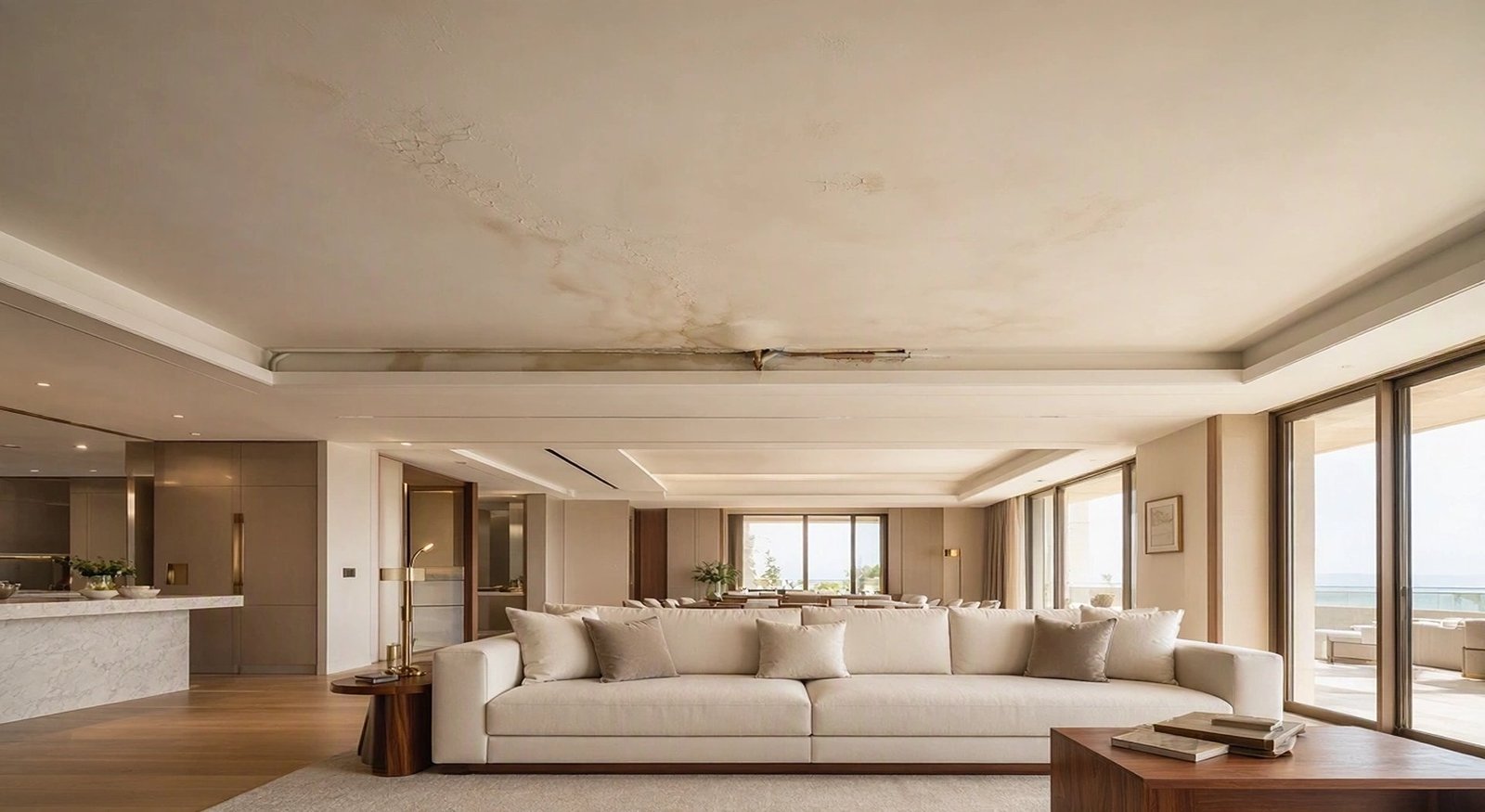
A stained, bulging, or sagging ceiling is a symptom of water — not a paint problem. In Dubai villas the source is usually an AC condensate line, a concealed plumbing pipe, a bathroom above, or a roof/terrace leak. You cannot repair the ceiling until the leak is found and stopped.
If the ceiling is bulging or sagging, keep the room clear, switch off the electricity to that area, and get it inspected before the board collapses. A gypsum ceiling that has absorbed water loses strength quickly. Most water-damaged ceilings are repairable — if you fix the source first and replace the damaged section rather than painting over it.
First: Is This an Emergency?
Not every ceiling stain is urgent, but some are. Treat it as urgent and act now if:
- The ceiling is visibly bulging or sagging, especially with a drip forming
- Water is actively dripping or running down a wall
- The ceiling feels soft or spongy to a careful touch
- The stain is spreading quickly, or you can hear water above it
- There is a light fitting, fan, or wiring in the affected ceiling area
What Is Actually Causing It in Dubai Villas
The ceiling is the last place the water appears and the first place you notice it. The real cause is almost always above or beside it.
AC Condensate Leaks
This is the most common cause of ceiling stains in Dubai villas. The condensate drain line can block, disconnect, or slope the wrong way. Water then backs up and finds its way into the ceiling void.
Signs: The stain appears or worsens when the AC is running, often in summer. It may be near an indoor unit, in a corridor, or above a bathroom. Related HVAC services can help diagnose and clear the drain.
Concealed Plumbing Leaks
A pipe inside a wall or ceiling void — supply line, drainage, or a bathroom above — can develop a pinhole leak or a failed joint. These leaks are often slow and hidden.
Signs: A stain that grows steadily over days or weeks, sometimes with a musty smell. It may be directly below a bathroom, kitchen, or water heater. Plumbing services in Dubai can help locate and repair the source.
Roof, Terrace or Balcony Leaks
In villas with roof terraces, balconies, or flat roofs, failed waterproofing lets water through during rain or when the terrace is washed.
Signs: Stains that appear or worsen after rain or after washing a terrace. The stain is often near an external wall or below an outdoor area.
Bathroom and Wet-Area Failures
Failed grout, silicone, or waterproofing in a bathroom above lets water seep into the slab and through to the ceiling below. This is common in villas where a bathroom sits over a hallway or living space.
Signs: A stain below a bathroom, often with peeling paint or a musty smell. It may worsen after showers.
Previous Repair That Was Painted Over
Sometimes the leak was fixed but the stained gypsum was never replaced — just painted. The stain bleeds back through water-based paint, and the softened board stays weak. If the ceiling was repaired before and the stain has returned, the leak may not have been fully resolved.
Why You Cannot Just Paint Over It
Painting a water stain without fixing the cause and sealing the board is the most common mistake. Water-based paint does not block the stain — it wicks through and the mark returns. More importantly, the gypsum board itself has absorbed water and lost strength. A painted-over sagging board is still a sagging board, and it can fail later.
The correct repair has three stages: find and stop the leak, replace the damaged board, then finish and repaint.
Ceiling stained, bulging, or sagging?
Do not paint over it. Get the leak traced and the ceiling repaired properly with MAINTAINED.
How the Repair Is Done Properly
Once the leak source is confirmed and stopped, the ceiling repair follows a clear sequence.
Confirm the Leak Is Fixed
The source must be repaired and tested — AC drain cleared and re-routed, pipe joint replaced, waterproofing redone, or bathroom seals renewed. Repairing the ceiling before this is confirmed wastes the work.
Remove the Damaged Section
Wet, soft, or sagging gypsum is cut out back to sound board. Stained but structurally sound board may sometimes be sealed and reused, but sagging or bubbling board must be replaced.
Dry the Void and Treat for Moisture
The space above the ceiling is checked for damp insulation, mould, or trapped moisture. In Dubai’s humidity, a damp void left untreated can cause mould and odour even after the visible repair.
Install the New Gypsum
The replacement board is cut to size, fixed to the existing framing, and taped and jointed. The joint is reinforced and finished so it disappears under paint.
Seal, Skim and Repaint
The repaired area is sealed with a stain-blocking primer, skimmed to match the surrounding finish, sanded, and painted to blend with the rest of the ceiling. A stain-blocking primer matters — ordinary paint will let the old mark bleed through.
Check the Surrounding Ceiling
Water travels. The area around the repair is inspected for hidden damage, and any soft spots or secondary stains are addressed before the job is closed.
When to Stop DIY and Call a Professional
Call a professional if:
- The ceiling is sagging, bulging, or soft
- The leak source is not obvious
- The stain keeps returning after a repair
- There is mould, musty smell, or damp insulation above
- The affected area contains lights, fans, or wiring
- The ceiling is large or has a decorative finish
For villa owners in Dubai dealing with a stained or sagging ceiling, Gypsum Partitions and Drylining Services can trace the leak, replace the damaged board, and finish the ceiling so it blends with the existing surface.
How to Stop It Coming Back
- Service AC condensate lines before summer — clear the drain and check the slope
- Check bathroom and wet-area seals annually
- Inspect roof and terrace waterproofing before the rainy season
- Fix plumbing leaks promptly
- Do not paint over a stain without fixing the source
- Keep the ceiling void dry and ventilated
Frequently Asked Questions
Can I just paint over a water stain on my ceiling?
Only if the leak is fixed and the board is structurally sound. Even then, use a stain-blocking primer first — ordinary paint will let the mark bleed through. If the ceiling is sagging or soft, the board needs replacing.
How do I know if the ceiling is about to collapse?
A visible bulge, a sagging curve, a soft or spongy feel, or a drip forming at the lowest point are warning signs. Keep the room clear and get it inspected. Do not press hard on a bulging ceiling to test it.
What causes ceiling stains in Dubai villas most often?
AC condensate leaks are the most common cause, followed by concealed plumbing leaks, bathroom waterproofing failures, and roof or terrace leaks.
Can a water-damaged gypsum ceiling be repaired, or does it need replacing?
Stained but sound board can sometimes be sealed and repainted. Sagging, bubbling, or soft board has lost strength and must be cut out and replaced. The repair is then taped, skimmed, and repainted to match.
How long does a ceiling repair take?
If the leak is already fixed, a small section repair is typically a short job. Drying time and repainting add to the schedule. If the leak source still needs finding and repairing, plan for longer.
Final Thoughts
Ceiling stained, bulging, or sagging? Do not paint over it or wait for it to come down. Send a photo of the affected area and describe when the stain appears — AC running, after rain, or after showers — and get the leak traced and the ceiling repaired properly, once.
Professional drylining services in Dubai can handle the full process from leak investigation to finished ceiling repair.
Repair your ceiling the right way
Professional drylining and ceiling repair for water-damaged gypsum in Dubai villas.