

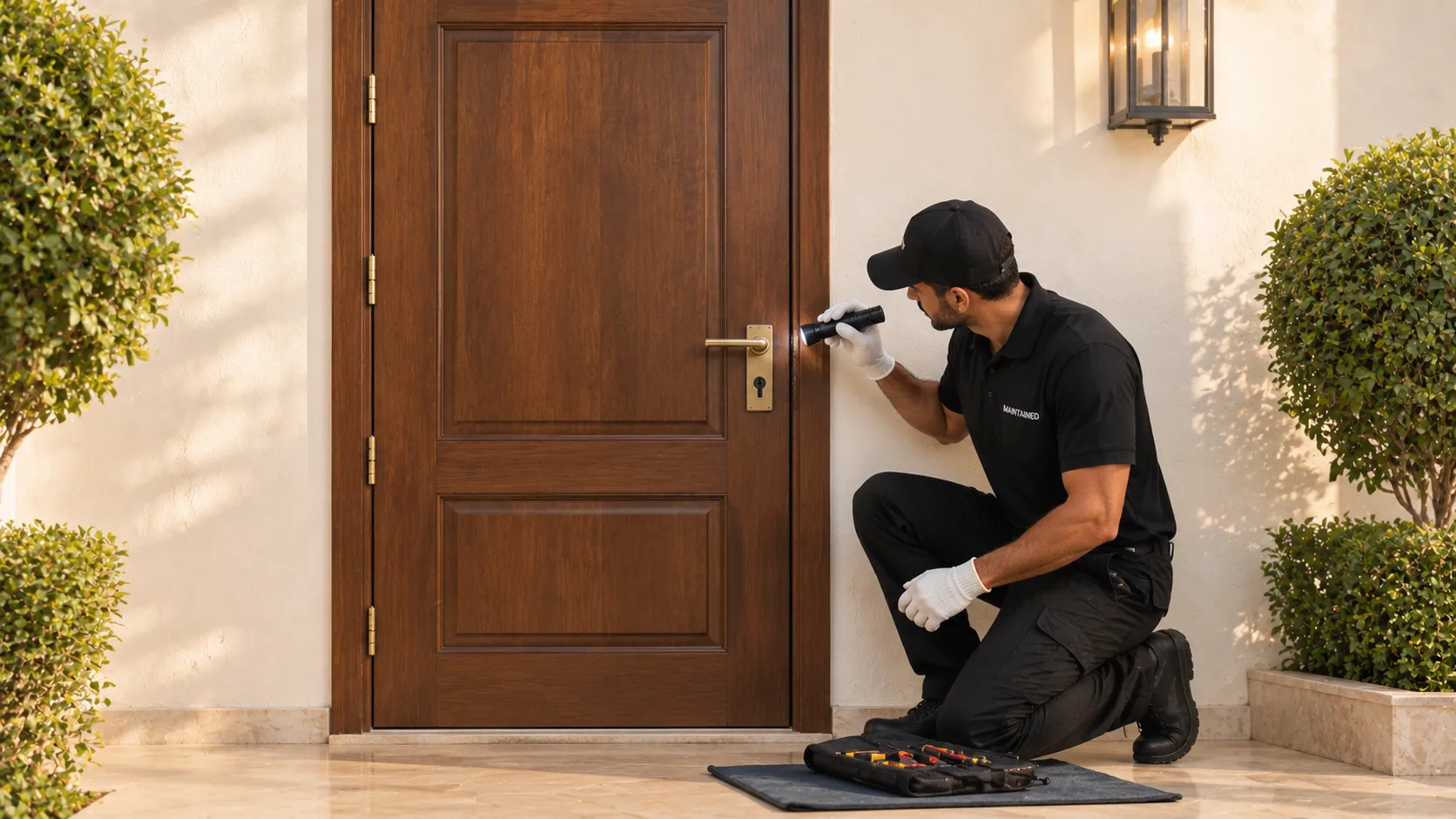
If your key won’t turn, the door won’t lock, or a key has snapped inside the cylinder, stop forcing it. In most Dubai villas the cause is one of five things: a misaligned strike plate or latch, a dry or dirty cylinder, a bent or worn key, a loose hinge that has dropped the door, or a broken key fragment lodged in the lock. Forcing the key or slamming the door turns a five-minute fix into a lock replacement—and if a key is snapped inside, you should not try to dig it out with a screwdriver.
A jammed lock is more than an inconvenience. It is a security problem: a door that will not lock properly is a door that can be pushed open. Below is what each symptom actually means, what you can safely check yourself, and when to stop and call a locksmith.
First, Identify Which Problem You Actually Have
The three symptoms in the title sound similar but have different causes and different fixes. Before you touch anything, work out which one you are dealing with.
- The key won’t turn. The key goes in but will not rotate. This usually points to a cylinder problem—dirt, lack of lubrication, a worn key, or internal damage—or to the door being out of alignment so the latch is binding against the strike plate.
- The door won’t lock. The key turns, or the handle moves, but the latch or deadbolt will not engage into the frame. This is almost always an alignment issue: the door has dropped, the strike plate has moved, or the latch is not lining up with the hole in the frame.
- The key has snapped in the lock. Part of the key is stuck inside the cylinder. This is the most urgent case because the broken fragment blocks the cylinder and can damage the pins if you keep poking at it.
Knowing which of these you have tells you whether this is a lubrication job, an alignment job, or a locksmith call.
The Door Has Dropped and the Latch No Longer Aligns
This is the single most common reason a door suddenly will not lock, especially in villas with heavy external doors. Over time, hinges wear, screws loosen, and the door sags slightly. A drop of even two or three millimetres is enough to stop the latch or deadbolt from entering the strike plate cleanly.
Signs: The door locks fine when you lift the handle or push the door, but not when it is hanging freely. You can see a shiny scrape mark on the strike plate where the latch has been rubbing. The gap between the door and frame is uneven—wider at the top or bottom.
What to do: Check the hinge screws first. If they are loose, tighten them. If the screws spin without gripping, the screw holes in the frame are stripped and need filling and re-drilling—do not just use longer screws, because they can split the frame. If the door has genuinely dropped, the strike plate may need to be adjusted or the hinges re-set. This is a job for someone with the right tools; forcing the door closed will damage the latch and the frame.
The Cylinder Is Dry, Dirty or Worn
A cylinder that has not been lubricated in years collects dust and grit. In Dubai, fine sand and dust find their way into external locks constantly. The result is a key that goes in but grinds or refuses to turn.
Signs: The key is stiff and gritty as you insert it, and it turns with effort but not smoothly. The problem gets worse over weeks rather than appearing overnight.
What to do: Use a graphite or PTFE-based lock lubricant—not cooking oil, not WD-40 as a long-term fix, and never grease. Oil attracts dust and turns into a sticky paste that makes the problem worse. Spray a small amount into the keyhole, insert the key, and work it gently in and out and back and forth.
The Key Itself Is Worn or Bent
Keys wear down. The cuts on the key blade lose their sharp edges after years of use, and a worn key will eventually fail to lift the pins correctly. A bent key is even more dangerous because it can break off inside the cylinder.
Signs: The key works in one lock but not another, or it only works if you jiggle it at a certain angle. Hold the key up to a straight edge—if the blade is visibly bent, stop using it.
What to do: Try a spare key. If the spare works smoothly and the original does not, the original is worn and should be replaced by cutting a new key from the spare—not from the worn one. If you have no spare, this is the moment to call a locksmith rather than keep forcing a key you know is failing.
Latch, Strike Plate or Hinge Problems
Sometimes the lock itself is fine and the problem is the hardware around it. The latch may be sticking inside the door, the strike plate may have been knocked out of position, or a hinge pin may have worked loose.
Signs: The handle feels loose or spongy. The latch does not spring back when you press it. The strike plate is visibly out of line with the latch, or the screws holding it are loose.
What to do: Check that the latch moves freely when the door is open. If it does, the lock is likely fine and the alignment is the issue. Tighten the strike plate screws. If the strike plate has been forced and the screw holes are enlarged, the plate needs re-seating.
A Broken Key Is Stuck in the Lock
This is the case where DIY attempts do the most damage. A broken key fragment sitting in the cylinder is blocking the pins. Poking at it with a screwdriver, a paperclip, or a second key can push it deeper, bend the pins, or scratch the cylinder beyond repair.
Signs: You can see the broken end of the key in the keyhole, or the key went in and snapped and part of it is missing.
What to do: Stop. Do not insert anything else into the lock. Do not try to vacuum it out or spray lubricant into it—lubricant can make the fragment harder to grip. If the fragment is protruding and you can grip it with fine needle-nose pliers without pushing it inward, you may carefully try to pull it straight out. If it is flush or recessed, leave it and call a locksmith. Extracting a broken key requires proper extraction tools and, if the cylinder is damaged, replacement.
When to Stop and Call a Locksmith
Some lock problems are a lubrication and alignment job. Others are a security risk if handled wrong. Call a professional if any of these apply:
- A key is snapped inside the lock and is not protruding enough to grip safely
- The door will not lock at all and you cannot see an obvious alignment issue
- The cylinder turns freely without engaging anything—this can mean the internal mechanism has failed, and the door may not actually be secure even when it looks closed
- You have forced the key and it now turns too easily or not at all—internal pins may be damaged
- The lock is on an external or main entrance door—a failed external lock is a security issue, not a convenience issue
- You have tried lubrication and alignment and the problem persists—continuing to force it risks a snapped key and a bigger repair
For villa owners and residents in Dubai, Fast Locksmith Solutions for Villas and Residences in Dubai can extract a broken key, re-align or replace the cylinder, adjust a dropped door, and make sure the lock actually secures when they leave—rather than just making the key turn. That matters more than speed alone when the door is your main entrance.
How to Prevent It Happening Again
A few habits keep locks working in Dubai’s dust and heat:
- Lubricate external locks twice a year with graphite or PTFE spray—before summer and after it
- Do not hang heavy items on the handle. Bags and keys hanging on a lever handle gradually pull the mechanism out of alignment
- Check hinge screws annually. Tighten any that have loosened before the door drops
- Keep a spare key and replace worn keys before they fail, not after
- Never force a stiff key. If it needs force, something is wrong—find out what before it snaps
Key stuck, snapped or refusing to turn?
Contact MAINTAINED to discuss locksmith support and request an assessment for your Dubai property.
Frequently Asked Questions
Can I use WD-40 to fix a stiff lock?
WD-40 can free a momentarily stuck lock, but it is not a long-term lubricant. It attracts dust and leaves a residue that can make the problem worse in Dubai’s dusty conditions. Use a graphite or PTFE-based lock lubricant instead, and only a small amount.
How do I get a broken key out of a lock?
If a fragment is protruding and you can grip it with fine pliers without pushing it inward, you may carefully pull it straight out. If it is flush or recessed, do not poke at it—call a locksmith. Improper extraction can damage the cylinder and turn a simple job into a replacement.
Why does my door lock only when I lift the handle?
This is a classic sign that the door has dropped and the latch is not aligning with the strike plate. The hinge screws may be loose, or the strike plate may need adjustment. Tightening the hinges is the first check; if the door has genuinely sagged, the strike plate or hinges need re-setting.
Is it cheaper to replace the lock or repair it?
It depends on the fault. Lubrication, alignment, and a new key are inexpensive fixes. A damaged cylinder or a lock where the internal mechanism has failed usually needs replacement, and that is often the safer option for an external door anyway.
The key turns but the door won’t lock—what is wrong?
If the key turns but the latch or deadbolt does not engage, the problem is almost always alignment between the latch and the strike plate, not the lock itself. Check whether the door has dropped and whether the strike plate has moved. If the mechanism turns but nothing engages internally, the lock may have failed and needs professional inspection.
Lock jammed and the door won’t secure?
Do not force the key or leave an external door unsecured overnight. Send a photo of the lock and describe the symptom—key won’t turn, door won’t latch, or a key is snapped inside—and get it fixed properly before it becomes a security problem.