

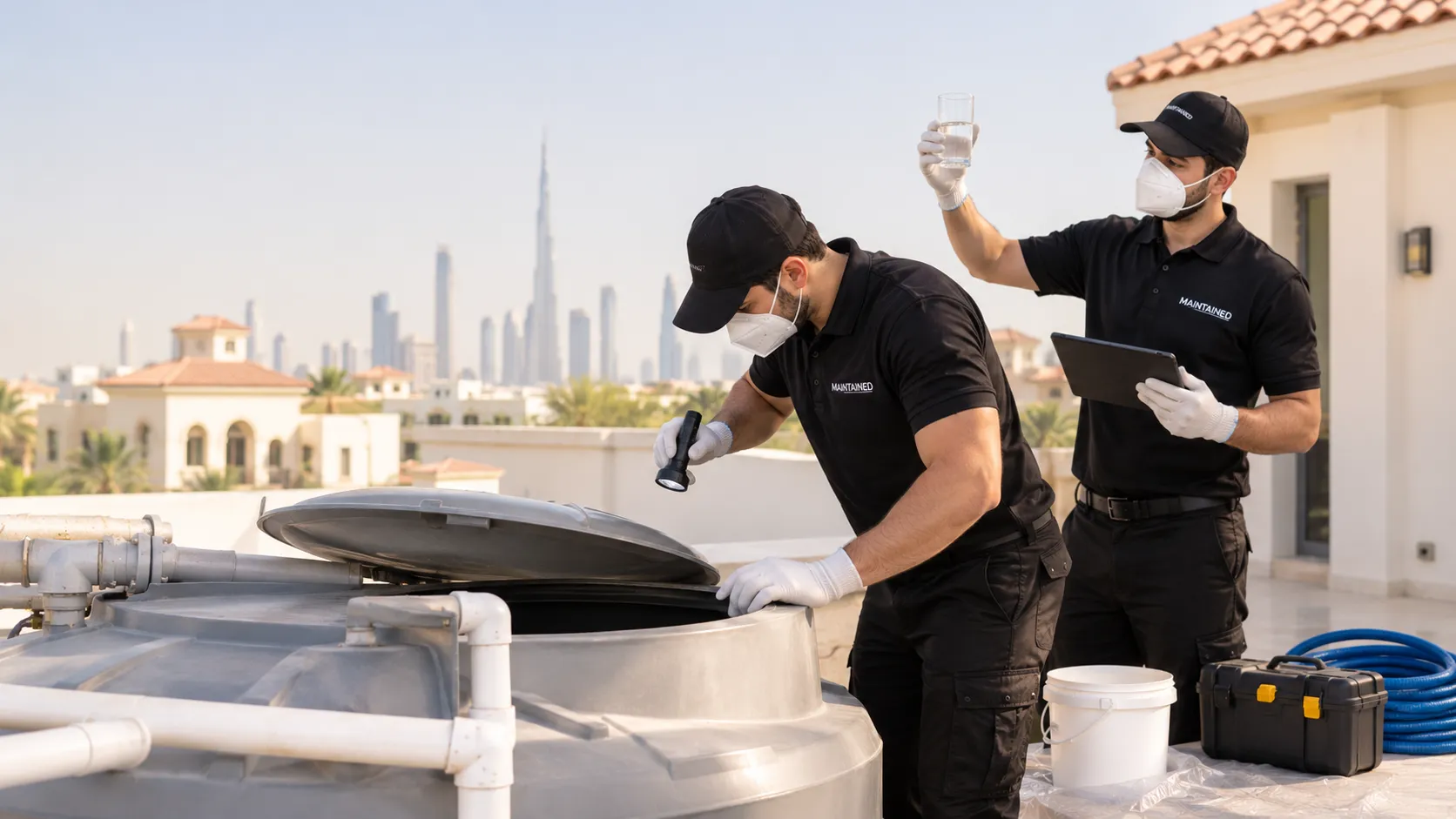
Dubai Municipality requires villa water tanks to be cleaned and disinfected at least once every six months, making twice-yearly cleaning the baseline described in this guide. Private residential properties should not assume they are exempt from applicable water tank maintenance requirements.
If you cannot remember when your tank was last cleaned, or you have noticed a change in the taste, smell, colour or pressure of your water, arrange an inspection rather than waiting for the next scheduled service. Addressing a potential problem early can help protect water quality and avoid more complicated repairs.
Water tanks are easy to overlook because they are usually out of sight. This guide explains the recommended cleaning schedule, how tank location affects maintenance, which warning signs to watch for, what a professional cleaning involves and how to plan the cost.
How Often Should a Villa Water Tank Be Cleaned in Dubai?
The key point is to follow the applicable Dubai Municipality requirements and maintain a documented cleaning schedule. For potable water storage tanks, the guidance described here is to arrange cleaning and disinfection at least twice a year.
- Standard schedule: At least once every six months
- Annual frequency: Two scheduled cleaning visits
- After contamination concerns: Arrange an inspection promptly
- After renovation: Assess the tank before returning to normal use
- After plumbing work: Check whether cleaning or disinfection is needed
- Unknown service history: Arrange an inspection and establish a new schedule
Tank cleaning should include more than rinsing the interior. A proper service addresses accumulated sediment, cleans the internal surfaces, disinfects the tank and checks for defects that could allow contamination to return.
What Is the Required Water Tank Cleaning Schedule?
The six-month interval is the baseline described in this guide, but the condition and location of a tank can affect how frequently it needs attention. The schedule should account for exposure to sunlight, dust, the condition of the lid and any known water quality concerns.
Cleaning and disinfection should be carried out by a suitably licensed contractor where required. The process generally involves draining the tank, removing sediment, cleaning the internal surfaces, applying an appropriate disinfectant and rinsing thoroughly.
- Confirm the date of the previous cleaning
- Arrange the next service before the six-month deadline
- Check the tank lid, vents and seals for damage
- Keep the service report and contractor details
- Follow any additional instructions after water quality testing
- Arrange an additional inspection when contamination is suspected
Service records help property owners and managers demonstrate that maintenance has been arranged. The exact documents required can depend on the property and the applicable regulatory requirements.
How Tank Type Affects Cleaning Frequency
Different tank locations create different maintenance challenges. The following intervals are practical maintenance considerations, not a replacement for any mandatory cleaning schedule or professional assessment.
Underground Water Tanks
Underground tanks are generally less exposed to direct sunlight and airborne dust than rooftop tanks. However, sediment can still accumulate, and the tank may be affected by defects, seepage or problems with its access cover.
- Inspect the access cover and surrounding area
- Check for sediment and visible debris during servicing
- Investigate unexplained changes in water quality
- Keep to the applicable cleaning and disinfection schedule
Rooftop and Elevated Tanks
Rooftop tanks are exposed to Dubai’s heat, dust and sunlight. If the cover or seals are damaged, contaminants can enter the tank and conditions may encourage algae or biofilm to develop.
- Inspect the lid and seals regularly
- Look for visible algae, residue or debris
- Check for damage caused by weather or ageing
- Ask a qualified contractor whether more frequent servicing is needed
Open or Partially Covered Tanks
Tanks that are not fully sealed have a greater risk of exposure to dust, insects and other debris. They should be assessed promptly and made secure where possible. A professional can advise on the necessary cleaning frequency based on the tank’s condition and applicable requirements.
After Renovation, Plumbing Work or Long Vacancies
Construction dust, plumbing work and stagnant water can create additional water quality concerns. Do not automatically wait until the next routine service if the tank may have been contaminated.
Warning Signs Your Water Tank Needs Cleaning
A tank may need attention even when the water appears normal. If you notice any of the following signs, arrange an appropriate inspection rather than relying only on the usual cleaning calendar.
1. Unusual Taste or Smell
A metallic, earthy, musty or stale taste or smell can indicate a water quality problem. Possible causes include sediment, microbial growth, plumbing issues or changes in the water supply. A persistent change should be investigated rather than automatically attributed to the pipes.
2. Yellow, Brown or Cloudy Water
Discoloured or cloudy water, visible flakes or sediment in a glass can indicate rust, deposits or other contamination. The source may be the tank, the plumbing or the incoming supply, so further investigation may be necessary.
3. Reduced Water Pressure
A pressure drop at several taps may indicate a problem affecting a shared supply, such as sediment, a filter, a pump or a plumbing restriction. A tank cleaning may help if deposits are contributing to the problem, but pressure loss can have other causes.
4. Visible Algae, Slime or Floating Debris
Green or brown growth, a slimy coating on internal surfaces or debris floating on the water are reasons to arrange prompt professional assessment. Light entering through a damaged lid can contribute to algae growth, particularly in warm conditions.
5. Damaged Tank Lid or Seals
A cracked, warped or poorly fitted lid can allow dust, insects and other debris to enter. Even a recently cleaned tank may be vulnerable to renewed contamination if its cover and seals do not provide adequate protection.
6. Repeated Digestive Illness in the Household
Repeated unexplained digestive symptoms among people sharing the same water supply warrant medical advice and investigation of possible environmental causes. Symptoms alone cannot establish that a water tank is responsible, but suspected water contamination should be assessed promptly.
7. No Record of the Last Cleaning
If you cannot establish when the tank was last serviced, arrange an inspection and confirm the appropriate cleaning schedule. A tank that looks clean from the outside is not proof that its water is safe.
Is your villa water tank overdue for cleaning?
Arrange a professional assessment of your tank’s condition, cleaning requirements and maintenance schedule in Dubai.
What Does Professional Water Tank Cleaning Involve?
A proper water tank clean involves a defined process rather than simply spraying the internal walls. The contractor should explain the steps required for your specific tank and follow the applicable safety and disinfection procedures.
- 1. Isolate and drain: The tank is safely isolated from the relevant supply and drained as required.
- 2. Remove sediment: Sludge, deposits and accumulated debris are removed from the tank floor.
- 3. Clean internal surfaces: The walls and other accessible internal surfaces are cleaned using suitable equipment.
- 4. Disinfect the tank: An appropriate disinfectant is applied according to the applicable procedure and concentration.
- 5. Rinse thoroughly: The tank is rinsed as required to remove cleaning residues.
- 6. Refill and flush: The system is returned to service in accordance with the required procedure.
- 7. Inspect the tank: The lid, vents, seals and accessible surfaces are checked for defects that could allow contamination.
- 8. Document the service: The contractor provides a service record and any agreed test documentation.
The exact cleaning and disinfection procedure depends on the tank, its condition and the applicable requirements. Ask the contractor to explain how the tank will be cleaned and disinfected before confirming the booking.
DIY Cleaning vs Professional Water Tank Cleaning
Cleaning a small, accessible tank yourself may appear straightforward, but safe disinfection requires more than a brush and household bleach. Incorrect chemical concentrations, inadequate rinsing or missed damage can create further water quality concerns.
- Chemical handling: Disinfectants must be handled and used correctly
- Internal inspection: Cracks and damaged seals may be difficult to identify
- Sediment removal: Deposits must be removed effectively
- Safe access: Tank openings and elevated installations can present hazards
- Documentation: DIY work may not provide the service records required for compliance
- Water quality: Testing may be needed when contamination is suspected
For villa owners in Dubai, a professional service can help manage the cleaning process, inspect accessible components and provide documentation. Where a licensed contractor is required, a DIY clean may not satisfy the applicable regulatory requirements.
For villa owners and property managers who want a structured service, Water Tank Cleaning for Villas and Buildings in Dubai can be used to discuss the cleaning procedure, maintenance arrangements and service documentation for the property.
How Much Does Villa Water Tank Cleaning Cost in Dubai?
Villa water tank cleaning in Dubai is described in this guide as typically costing around AED 300–1,500 per service. The final amount depends on the tank’s size, location, accessibility and the amount of sediment that needs to be removed.
- Smaller tanks: May fall towards the lower end of the range
- Large underground tanks: May cost more because of their size and access requirements
- Heavy sediment: Can increase the time and labour required
- Difficult access: May require additional equipment or preparation
- Additional testing: May add to the overall service cost
- Maintenance packages: May combine scheduled visits into one arrangement
If your tank requires cleaning every six months, budget for two visits a year rather than assuming one annual clean will be sufficient. Ask providers whether they offer a maintenance arrangement that includes both scheduled visits.
How to Keep Your Water Tank Cleaner Between Services
Routine maintenance can help reduce the risk of contamination between scheduled cleaning visits. These precautions do not replace the required cleaning and disinfection schedule.
- Check the lid and vents: Inspect covers and seals regularly and arrange repairs if they are damaged.
- Monitor water changes: Take unusual taste, smell, colour or pressure changes seriously.
- Inspect after renovation: Assess the tank if nearby construction or plumbing work may have introduced contaminants.
- Keep service records: Record the visit date, contractor details and the next planned cleaning.
- Schedule ahead: Book the next visit before the current maintenance interval expires.
- Review recurring problems: Ask a professional to investigate repeated contamination or water quality issues.
Planning ahead is particularly useful for landlords and property managers who need to coordinate maintenance across multiple villas. A documented schedule helps prevent visits from being forgotten during tenant changes or long vacancies.
Frequently Asked Questions
Is water tank cleaning mandatory for private villas in Dubai?
The guidance described in this article is that potable water tanks should be cleaned and disinfected at least every six months. Property owners should confirm the current Dubai Municipality requirements and any applicable contractor licensing or documentation conditions for their particular property.
How often should a rooftop water tank be cleaned?
The six-month interval is the baseline discussed in this guide. Rooftop tanks exposed to heat and dust, or tanks with damaged covers, may need more frequent assessment. A qualified contractor can recommend an appropriate schedule based on the tank’s condition and applicable requirements.
Can I clean my villa water tank myself?
DIY cleaning may be possible in limited circumstances, but safe disinfection, sediment removal and tank inspection require care. Where applicable regulations require a licensed contractor, DIY work may not satisfy those requirements or provide the necessary service documentation.
What happens if a water tank is not cleaned regularly?
Sediment, deposits and biofilm can accumulate inside a tank, and contamination may affect water quality. Inadequate maintenance can also allow problems with lids, seals and other components to go unnoticed. Applicable regulatory consequences should be confirmed with the relevant authority.
How long does villa water tank cleaning take?
The time depends on the tank’s size, accessibility, condition and the amount of sediment present. A standard service may take a few hours, while larger or heavily contaminated tanks can take longer. Ask the contractor for an estimated duration when requesting a quotation.
Can cleaning a water tank improve low water pressure?
It may help if sediment is contributing to a restriction in the tank or connected system. However, low pressure can also result from pump faults, blocked filters, plumbing restrictions or other issues. If the pressure remains low after cleaning, the system should be investigated separately.
What should I do if my tap water changes colour or smell?
Arrange a prompt assessment of the tank, plumbing and incoming water supply. If contamination is suspected, seek guidance from the relevant water authority or a qualified professional about testing and safe use. Appearance and smell alone cannot establish whether water is safe to drink.
How much does water tank cleaning cost in Dubai?
The indicative range provided in this guide is AED 300–1,500 per service. Tank size, access, sediment levels and any additional inspection or testing can affect the final quotation. Request a property-specific estimate before booking.
Final Thoughts
Water tank maintenance is an important part of protecting a villa’s water supply. Following an appropriate cleaning schedule, watching for changes in water quality and repairing damaged lids or seals can help reduce the risk of contamination.
Do not wait for an unusual taste, smell or visible residue before checking the service history. Arrange professional assessment when the last cleaning date is unknown, keep the service documentation and follow the applicable Dubai Municipality requirements for your property.
For help arranging a maintenance visit, explore MAINTAINED’s water tank cleaning service for villas and buildings in Dubai.
Keep your villa water tank on schedule
Arrange a professional assessment and plan your next water tank cleaning visit with MAINTAINED.