

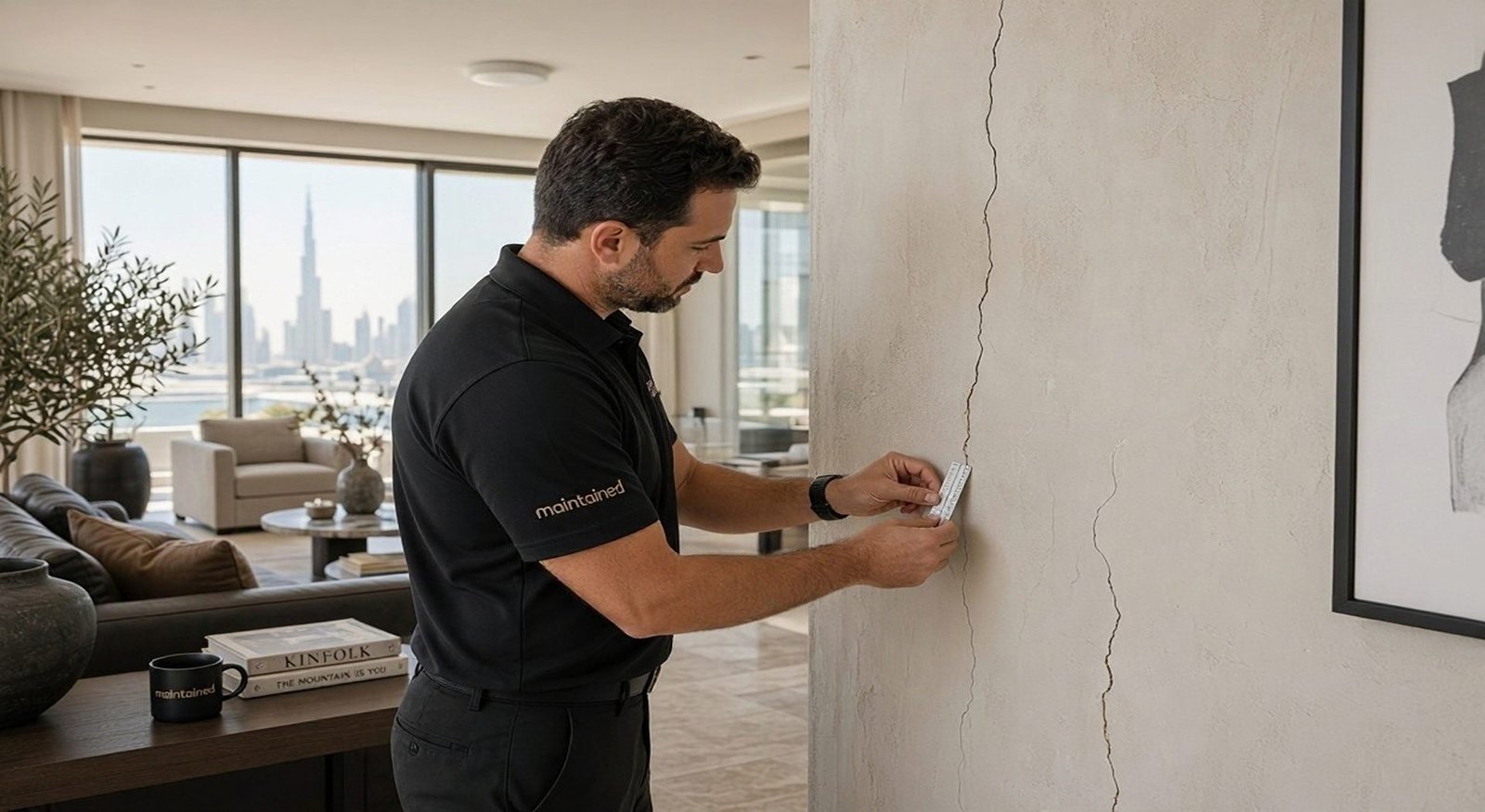
Every villa in Dubai develops cracks eventually. Some are the width of a hair and appear in the first year, then never move. Others start as a thin line and widen over a summer until you can fit a fingernail into them. The two look similar in a photo and are completely different problems.
The trouble is that most people either panic at a hairline crack or ignore a serious one because it doesn’t look dramatic. This guide sets out which cracks in villa walls and ceilings are normal, which ones are worth worrying about, and how a proper repair is done — because painting over a crack without fixing the cause is the single most common mistake we see.
Are Cracks in Walls and Ceilings Normal in a Dubai Villa?
Most of them, yes. A new villa settles in its first two years, and the plaster moves slightly as it cures. After that, the seasonal cycle takes over: summer heat expands the structure, winter contracts it, and the decoration layer takes the strain.
Hairline cracks in wall surfaces
A hairline crack — under about 0.3mm, barely visible unless you look closely — is almost always a plaster or paint issue rather than a structural one. They appear at corners, above door frames, along the joint between two different materials, and anywhere the plaster is thin. They are cosmetic. They are also very common in villas where the plaster was applied quickly or the decoration was done before the substrate was fully dry.
Cracks that come from settlement
Settlement cracks show up in the first 12 to 24 months and follow a pattern: diagonal lines from the corners of door and window openings, or straight lines where two walls meet. They usually stabilise. The way to tell is simple — measure the width now, measure again in six months. If it hasn’t changed, it’s done moving.
Crack in Wall or Ceiling: When to Worry
There are a few specific patterns that change the conversation from decoration to inspection.
Horizontal cracks in walls
A horizontal crack is the one to take seriously. Vertical and diagonal cracks usually follow the way the building moves. A horizontal crack — particularly in an external wall, or at the level of a floor slab — can indicate movement in the structure itself, or pressure from outside. This is the kind of crack that warrants a proper look rather than a tube of filler.
Fissures on wall that keep reopening
If a crack has been filled and painted twice and keeps coming back in the same place, the movement underneath is still happening. Filling it a third time will produce the same result. Something is moving — a substrate joint, a thermal expansion point, or moisture behind the plaster.
Ceiling cracks and damp
A crack in a ceiling is often a plasterboard joint that has opened up, and on its own that’s minor. But if the ceiling is cracked and there’s also a stain, or the plaster around the crack feels soft, moisture is involved. That usually traces back to a leak above — a bathroom floor, a water tank, or AC condensate. Our AC and condensate checks in Dubai rule out the cooling system before anyone starts repairing plaster.
- Hairline crack, no movement over months — Most likely cause: plaster shrinkage or paint movement. What to do: fill, tape and repaint
- Diagonal crack from a door or window corner — Most likely cause: settlement, usually stabilised. What to do: monitor, then repair
- Horizontal crack in an external wall — Most likely cause: possible structural movement. What to do: book an inspection before repairing
- Crack that reopens after filling — Most likely cause: ongoing movement or moisture. What to do: find the cause first
- Ceiling crack with a stain or soft plaster — Most likely cause: water from above. What to do: trace the leak, then repair
Dubai Building Crack Causes: Heat, Moisture and Plaster
The reason cracks in walls Dubai villas develop so reliably comes down to three things.
Thermal movement
A villa façade in direct sun can be 30°C hotter than the shaded side. The structure expands and contracts daily, and the decoration layer — plaster, skim, paint — moves at a slightly different rate. Over years, that difference shows up as fine cracking, especially on south and west-facing walls.
Plaster cracking and thin mixes
Plaster that was mixed lean, applied too thin, or dried too fast is far more prone to cracking. In villas built quickly, this is a common finding: the crack isn’t structural at all, it’s the plaster letting go. Our plaster and drylining repairs in Dubai deal with this regularly, and it’s a different repair from a structural one.
Moisture behind the surface
Water is the quiet cause. A slow leak behind a wall, or damp rising through a wall base, pushes the plaster away from the substrate and produces a crack that keeps reopening. Filling it without finding the water is a waste of money — which is why we bring in leak detection and plumbing repairs in Dubai when a crack looks damp rather than dry.
Cracks in your villa’s walls or ceilings?
Contact MAINTAINED to find out whether they need filling or investigating before anything is painted.
Villa Cladding and Exterior Cracks
Cracks on the outside of a villa behave differently from interior ones, and they matter more because they let water in.
Cladding joints open with thermal movement, and once water gets behind the cladding, it tracks down and appears internally — often as a crack or damp patch well away from the original point. If the exterior has visible cracking, staining, or joints that have opened, an exterior inspection before decoration is worth doing. A clean façade also makes small defects far easier to spot, which is why we often recommend a proper exterior façade and cladding clean in Dubai ahead of any repair survey.
Wall Crack Repair Before Painting: Why Filler Alone Fails
This is the part most people get wrong, and it’s the reason the same crack reappears a year after painting.
Filling a crack with decorator’s filler and painting over it works only if the crack is completely stable and the substrate behind it is sound. On a live crack, the filler is rigid and the wall isn’t — so the movement pulls the filler apart within a season. On a damp crack, the filler never bonds properly in the first place.
A proper repair follows a sequence: establish whether the crack is stable and dry, open it out slightly so the repair material can key in, fill with a flexible filler rather than a rigid one, embed mesh tape across the repair to bridge the movement, skim over the tape, sand flat, and only then decorate. That sequence is what stops a crack returning, and it’s a plastering job before it’s a painting job.
How Cracks Are Repaired Before Painting
In practice, the work breaks down into four stages.
- First, assessment. The crack is measured, checked for moisture, and checked for movement. If it looks structural or damp, the repair pauses until the cause is confirmed.
- Second, preparation. Loose plaster is removed, the crack is opened into a shallow V so material can be pressed in, and the area is primed.
- Third, repair. Flexible filler goes in, mesh tape is bedded across it, and a skim coat is applied and feathered out well beyond the crack so there’s no visible ridge.
- Fourth, finishing. Once dry, the area is sanded, primed and painted — and the paint is blended into the surrounding wall, not just dabbed over the patch.
This is why a crack repair and a repaint are usually done together. Painting first and repairing later means painting twice. If the room also needs freshening up, our painting and decorating team in Dubai handles the repair and the finish in one visit, so the wall is done properly rather than patched and left.
When to Book a Wall Inspection
Book an inspection if any of these apply: a horizontal crack in an external wall, a crack wider than about 2mm, a crack that has reopened after being filled, a ceiling crack with any sign of damp, or cracks appearing in several rooms at once within a short period.
Book a repair rather than an inspection if the cracks are hairline, dry, have been in the same place for a year or more, and are purely a cosmetic annoyance before redecorating. That’s a straightforward plaster and paint job.
The cost of an inspection is small. The cost of ignoring a structural crack, or of repainting over a damp one three times, is not.
Book a wall inspection and repair in Dubai and get an honest answer on whether the crack needs filling or investigating. We cover Dubai-wide, and if the cause turns out to be a leak or a structural issue, we’ll tell you before anyone touches a paintbrush.
Frequently Asked Questions
Are cracks in walls and ceilings normal in Dubai?
Hairline and settlement cracks are normal, especially in the first two years and in south-facing walls. Horizontal cracks, cracks wider than 2mm, and cracks that keep reopening are not normal and should be inspected.
How do I know if a wall crack is structural?
Look at the direction and the behaviour. Horizontal cracks in external walls, cracks that widen over months, and cracks that appear alongside doors or windows going out of square are the ones to have checked. A crack that hasn’t changed in a year is almost certainly not structural.
Can I just fill a crack and paint over it?
Only if the crack is stable and dry. On a live crack, filler will split again within a season. The correct method is flexible filler plus mesh tape plus a skim coat, and that needs to be done before painting, not after.
Why does my ceiling crack keep coming back?
Either the joint underneath is still moving, or there’s moisture behind the plaster. A ceiling crack with any staining or softness needs the source traced before repair. Filling it repeatedly won’t solve either cause.
Do cracks in villa cladding need repairing?
Yes, because exterior cracks let water behind the cladding, and that water appears inside later. If the cladding joints have opened or the façade shows staining, have it inspected before the interior is decorated.
Find out whether the crack needs filling or investigating
Book a wall inspection and repair with MAINTAINED. We cover Dubai-wide.