

You notice it first in the shower. The flow that used to be decent is now a dribble, and the upstairs tap takes ten seconds to fill a glass. Nothing has changed in the house — no new boiler, no renovation, no burst pipe — but the pressure has quietly dropped and the morning routine has become a negotiation.
Low water pressure in a London townhouse is rarely a single problem. It depends on the system the house was built with, the height it has to push water to, and whether the mains supply in your street is up to the job. This guide covers the common causes, the difference between a Thames Water problem and a plumbing one, and what actually fixes weak showers in a multi-storey house.
Why Low Water Pressure Is Common in London Townhouses
Water pressure low in London is a long-standing issue, and townhouses make it worse than flats or bungalows.
Mains water pressure in London
Average mains water pressure in London sits somewhere around 2 to 4 bar at the street, depending on the area and the time of day. That’s fine for a ground-floor kitchen. It’s marginal for a bathroom on the third or fourth floor, because pressure drops roughly 0.1 bar per metre of height. A townhouse with a bathroom on the top floor is asking a lot of a mains supply that’s already on the lower end of the range.
West London and some parts of Mayfair have historically had lower mains pressure than the north and east, so a townhouse here can be struggling even when the supply is technically within standard. If you want to know whether you live in a low water pressure area, Thames Water publishes a pressure map by postcode — but the more useful answer usually comes from a test at the property.
Top floor flat low water pressure and upstairs taps
The classic pattern is very low water pressure upstairs, with the ground floor still acceptable. That gradient — worse the higher you go — is height, and it’s the single most common reason a townhouse has poor pressure while the neighbours don’t. It’s also the easiest to address, because the fix is usually a pump rather than anything to do with the mains.
Water Pressure Low in One Tap vs the Whole House
The first diagnostic question is whether the problem is local or property-wide.
Water pressure low in one tap
If water pressure low in one tap and the rest of the house is fine, the problem is almost certainly at that tap — a scaled aerator, a failing cartridge, or a partially closed isolation valve under the sink. These are small fixes, and they don’t involve the mains or a pump. A tap that’s slow on hot only can also point to a scaled cartridge in a thermostatic mixer.
Constant low water pressure across the property
If every outlet is weak, and it’s been that way for months, the issue is upstream — the supply, the system type, or a pressure-reducing valve that’s set too low. A sudden drop across the whole house (rather than a gradual one) is different again, and usually points to a supply interruption or a shared pipe problem in the area.
Tank-Fed vs Unvented Cylinder Systems
The system the townhouse was built with determines what’s achievable and what isn’t.
Tank-fed systems and why they lose pressure
Older London townhouses are often tank-fed — a cold water storage tank in the loft feeds the hot water cylinder and the bathroom outlets by gravity. The pressure at a tap is determined by the height difference between the tank and the outlet. A tank in the loft serving a bathroom directly below it is fine; a tank in the loft serving a bathroom two floors below is marginal; and a tank in a basement serving anything is going to be weak.
The tank itself also matters. A cold water tank that’s been in place for decades can accumulate sediment, which reduces flow and, over time, the effective capacity. If the tank hasn’t been cleaned or inspected, it’s worth doing before assuming the system is the problem — cold water tank cleaning in London is a routine service, and it’s often the cheapest thing to rule out first.
Unvented cylinder pressure
Unvented cylinders work differently. They’re fed directly from the mains at mains pressure and don’t rely on a tank. That should mean good pressure everywhere — but an unvented cylinder that isn’t set up correctly can perform worse than a tank-fed system. The common issues are a pressure-reducing valve set too low (often 2 bar when it should be 3), a scaled cylinder, or an air gap that’s been lost and needs recharging.
If the cylinder has recently been serviced or replaced, that’s a good reason to have it checked — a regulator that was set conservatively to avoid tripping a relief valve can leave the whole house on the weak side. Our heating and cylinder engineers in London can check the cylinder and the boiler side in the same visit.
Booster Pumps and Shower Pumps
When the system is tank-fed and the mains can’t help, a pump is the answer. But it has to be the right pump, installed correctly, or you’ll end up with a louder house and a barely improved shower.
Shower pump not working
A shower pump is a small pump installed between the tank and the shower valve, which boosts the flow to that outlet. When it stops working, the shower reverts to gravity pressure — usually a dribble. The common causes are a failed pump, a blocked filter on the pump inlet, an airlock in the supply, or a fused spur that’s been switched off during other work.
Before assuming the pump has failed, check the obvious: is it receiving power, and is there water reaching it? A pump that hums but doesn’t pump is usually airlocked or has a stuck impeller. A pump that’s completely silent may just have lost its electrical supply, which is worth having checked by our electrical fault finding team in London before replacing the unit.
Booster pump London townhouses
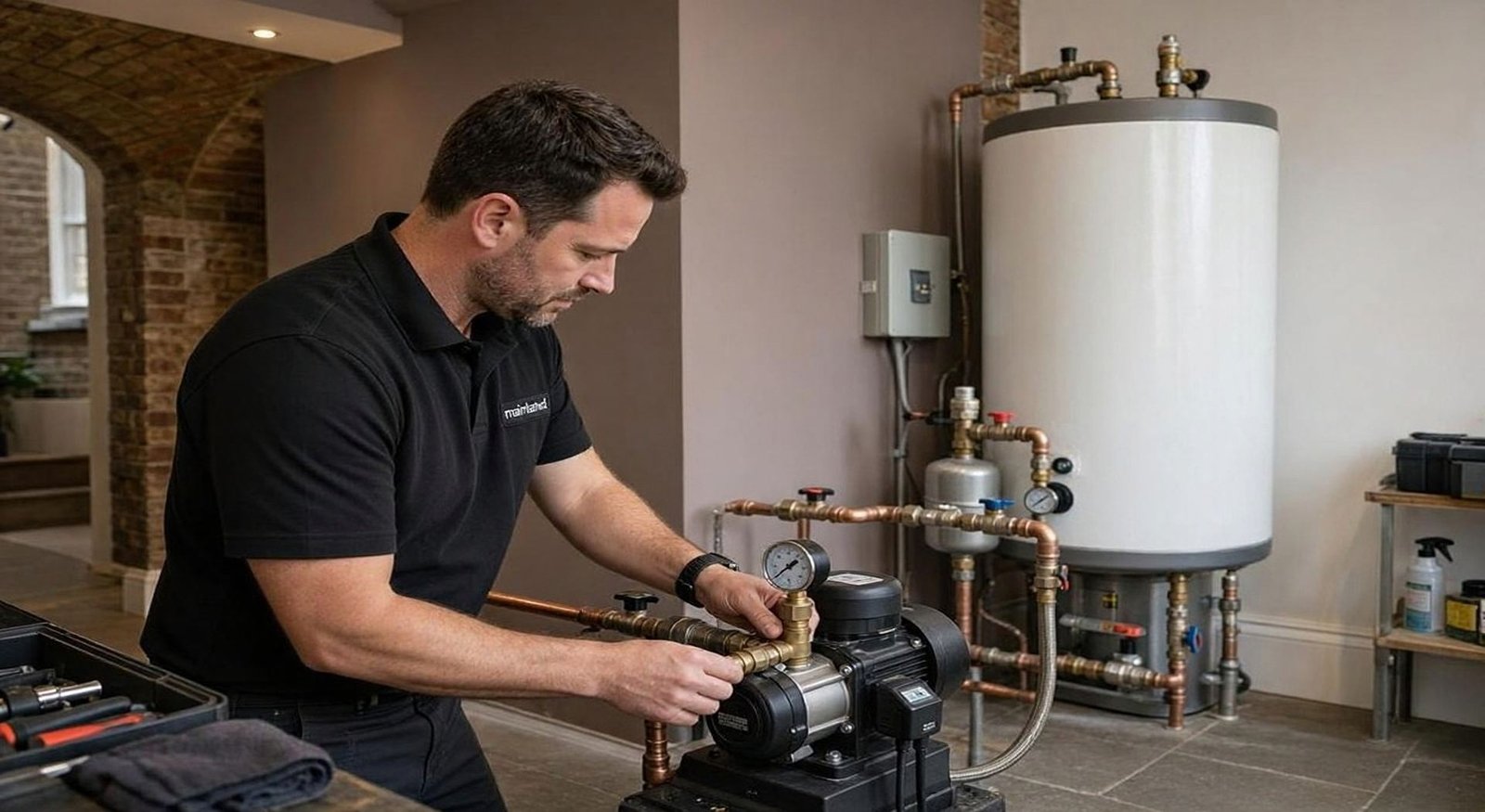
A whole-house booster pump is a bigger intervention, installed on the incoming main to raise the pressure to every outlet. It’s the right answer for many townhouses where the mains pressure is fine at the street but the height of the building kills it. It’s not the right answer for a house where the mains itself is weak — a booster pump can’t create pressure that isn’t there, and in some cases it can pull air into the supply and cause more problems than it solves.
The best booster pump installations are sized to the property, fitted with a bypass, and set up so the pump isn’t running when demand is low. If the pump is fitted and set up badly, the noise alone makes people regret it — which is why the pressure test and the system review come before the pump, not after.
Quick reference: symptom, cause and usual fix
- Weak upstairs only, ground floor fine — Most likely cause: height / tank-fed system. Usual fix: booster pump or shower pump.
- One tap only, rest of house fine — Most likely cause: scaled aerator or valve. Usual fix: clean or replace.
- Whole house weak, gradual over months — Most likely cause: scale, regulator, or filter. Usual fix: pressure test and service.
- Whole house weak, sudden drop — Most likely cause: mains supply or shared pipe. Usual fix: contact Thames Water first.
- Shower pump silent — Most likely cause: electrical supply or failed pump. Usual fix: electrical check, then pump.
Weak water pressure in your London townhouse?
Contact MAINTAINED now. We attend, test the pressure and tell you whether it’s the supply, the system or a single component.
Thames Water or Your Own Plumbing?
If the pressure has dropped suddenly, or the whole street seems affected, it’s worth checking with Thames Water before calling anyone. Thames Water publishes live updates on supply interruptions, and a planned or emergency mains repair can drop pressure for a day or more. If that’s the case, there’s nothing to fix in the house — it’ll come back on its own.
If Thames Water confirms the supply is fine at the street, the problem is in the property, and it’s worth booking a pressure test. That test measures the pressure at the incoming main and at the furthest outlet, which tells you whether the issue is the supply, the system type, or a specific component like a regulator or a pump.
Our plumbing team in Mayfair works with landlords and tenants regularly, and can confirm the cause before anyone commits to a fix.
How to Increase Water Pressure in a House UK
What’s realistic depends on the system. In a tank-fed townhouse, the options are a shower pump for one outlet, a whole-house booster pump for the property, or replacing the system with an unvented cylinder — which is a bigger job but solves the pressure problem permanently. In an unvented cylinder property, the fix is usually setting the regulator correctly or replacing a scaled component.
When to Book a Pressure Check
Book a pressure check if the pressure has been poor for more than a few weeks, if it’s noticeably worse than it used to be, or if you’re considering a pump or a system change and want to know whether it will actually help. A pressure test takes under an hour and it answers the question — is this the supply, the system, or one component — before anyone spends money on a fix.
Book a pressure check in London and get an honest answer before you commit to a pump. We cover Mayfair and central London, and if the answer is that the mains supply is the problem, we’ll say so rather than sell you a booster that won’t solve it. And if the small repairs around the fix — a new shower valve, a tap cartridge, some making good — need doing at the same time, our multi-skilled home repairs team in London can usually handle those in the same visit.
Frequently Asked Questions
Why is my water pressure low in London but fine elsewhere?
London’s mains pressure varies by area and is generally on the lower side of the UK range. Add the height of a townhouse and a tank-fed system, and weak upstairs outlets are very common. If the pressure is fine at the ground floor but poor upstairs, the cause is almost always height and system, not the supply.
How do I know if I live in a low water pressure area?
Thames Water publishes pressure data by postcode, but the more reliable answer comes from testing at the property. If the pressure is poor at the incoming main, it’s a supply issue. If it’s fine at the main and poor at the outlets, it’s your system.
Will a booster pump fix my low water pressure?
It depends on the cause. A booster pump solves pressure lost to height or a tank-fed system. It won’t solve pressure that isn’t there at the mains, and it won’t solve a scaled unvented cylinder or a regulator set too low. A pressure test tells you which of these you’re dealing with before you buy one.
Why has my shower pump stopped working?
The common causes are a failed pump, a blocked inlet filter, an airlock in the supply, or a lost electrical supply at the fused spur. A pump that hums without pumping is usually airlocked; a pump that’s completely silent may just need its electrical supply checked first.
Water pressure testing in London
We attend, test the pressure at the main and at the furthest outlet, and tell you honestly what the fix is before you spend on a pump. We cover Mayfair and central London.